Difference between revisions of "Hepatitis, Chronic"
m (→Introduction) |
|||
| (58 intermediate revisions by 7 users not shown) | |||
| Line 1: | Line 1: | ||
| − | + | ==Introduction== | |
| − | + | '''Chronic hepatitis''' is an inflammatory-necrotising disease of at least 6 months duration. It is characterised by hepatocellular [[Adaptive Immunity to Viruses|apoptosis]] or [[Necrosis - Pathology|necrosis]], a variable mononuclear or mixed inflammatory cell infiltrate, [[Liver Regeneration|regeneration]] and [[Liver Fibrosis|fibrosis]] (1). It predominantly consists of lymphocytic-plasmacytic inflammatory infiltration, and the disease process typically involves a slowly progressive inflammation which leads to fibrosis and possibly cirrhosis. | |
| − | |||
==Signalment== | ==Signalment== | ||
*Common in dogs, especially young to middle-aged dogs. | *Common in dogs, especially young to middle-aged dogs. | ||
| − | *Mixed and purebred dogs are affected but there is a familial predisposition in | + | *Mixed and purebred dogs are affected but there is a familial predisposition in the following breeds: |
| − | + | <gallery> | |
| − | + | Image:Dobermann.jpg|'''Dobermann'''<p>John Adams (2007) WikiMedia Commons | |
| − | + | Image:Bedlington.jpg|'''Bedlington Terrier'''<p> Pleple2000 (2006) WikiMedia Commons | |
| − | + | Image:Cocker_spaniel.jpg|'''Cocker Spaniel'''<p> Ellen Levy Finch (2004) WikiMedia Commons | |
| − | + | Image:Dalmatian.jpg|'''Dalmatian'''<p> Miroslav Cacik (2006) WikiMedia Commons | |
| − | + | Image:Skye_terrier.jpg|'''Skye Terrier'''<p> Pleple2000 (2007) WikiMedia Commons | |
| − | + | Image:Standard_poodle.jpg|'''Standard Poodle''' <p> John Leslie (2007) WikiMedia Commons | |
| − | + | Image:labrador.jpg|'''Labrador Retriever'''<p> Ellen Levy Finch (2004) WikiMedia Commons | |
| − | + | Image:GermanShep.jpg|'''German Shepherd (Alsatian)'''<p> Ellen Levy Finch (2004) WikiMedia Commons | |
| − | + | Image:Scottish_terrier.jpg|'''Scottish Terrier'''<p> Svencb (2003) WikiMedia Commons | |
| − | + | Image:Beagle.jpg|'''Beagle'''<p> sannse (2003) WikiMedia Commons | |
| − | == | + | </gallery> |
| − | + | ==Aetiology== | |
| − | |||
A number of aetiologies include: | A number of aetiologies include: | ||
*Familial predisposition | *Familial predisposition | ||
*Copper accumulation (copper storage disease) | *Copper accumulation (copper storage disease) | ||
| + | **This may be a cause or consequence of chronic hepatitis. Copper is normally excreted in bile, therefore it can occur with any cholestatic hepatobiliary disorder. | ||
*Chronic drug therapy | *Chronic drug therapy | ||
| − | *Infectious for | + | *Infectious, for example [[Infectious Canine Hepatitis|infectious canine hepatitis]] |
*Autoimmune or steroid responsive disorder | *Autoimmune or steroid responsive disorder | ||
| − | |||
===Clinical Signs=== | ===Clinical Signs=== | ||
| − | These include | + | These include: |
| − | *lethargy | + | *anorexia, lethargy and depression |
| − | *vomiting and diarrhoea | + | *weight loss |
| + | *[[Vomiting|vomiting]] and [[Diarrhoea|diarrhoea]] | ||
*polyuria and polydipsia | *polyuria and polydipsia | ||
| − | *ascites | + | *ascites - most consistent in dogs with [[Cirrhosis|cirrhosis]] |
| − | *and rarely icterus, seizures, fever and bleeding | + | *and rarely [[Icterus|icterus]], seizures, fever and bleeding diathesis |
===Laboratory tests=== | ===Laboratory tests=== | ||
| − | + | Haematology: | |
| − | *Increased alanine aminotransferase (ALT) and alkaline phosphatase (ALP). However these may not be | + | *Mild non-regenerative anaemia and microcytosis |
| + | |||
| + | Biochemistry: | ||
| + | *Increased alanine aminotransferase (ALT) and alkaline phosphatase (ALP). However these may not be increased if end-stage [[Cirrhosis|cirrhosis]] is reached. | ||
| + | *Hyperbilirubinaemia | ||
*Hypoalbuminaemia | *Hypoalbuminaemia | ||
| − | *Decreased urea | + | *Hyperglobulinaemia |
| + | *Decreased blood urea nitrogen (BUN) | ||
| + | *Hypoglycaemia | ||
| + | |||
| + | ====Further tests==== | ||
*Increased bile acids | *Increased bile acids | ||
| + | *Abnormal ammonia tolerance test | ||
| + | *Increased prolonged activated partial thromboplastin time (APTT) and prothrombin time (PT) indicates severe liver dysfunction or [[Disseminated Intravascular Coagulation|disseminated intravascular coagulation (DIC)]] | ||
| − | + | ==Imaging== | |
| + | Abdominal radiographs will only reveal microhepatica or ascites when advanced stages of disease are reached. | ||
| − | + | Ultrasonographically, liver may be normal or non specific changes in echogenecity may be seen in early stages of the disease. In cases of [[Cirrhosis|cirrhosis]], microhepatica, irregularity in hepatic margin, focal lesions corresponding to regenerative nodules, hyperechogenicity of liver parenchyma associated with increased fibrous tissue and ascites may be seen. | |
| − | |||
| + | ==Histopathology== | ||
| + | This is required for definitive diagnosis and to differentiate chronic hepatitis from other hepatopathies. Chronic hepatitis is characterised by moderate to severe lymphoplasmacellular [[Inflammation - Pathology|inflammation]] and [[Liver Necrosis|necrosis]] of the hepatocytes adjacent to the portal tracts. | ||
==Treatment== | ==Treatment== | ||
| − | *Glucocorticoids | + | *[[Steroids|Glucocorticoids]] |
| + | **Taper down with improved clinical signs and normal liver enzymes values. | ||
| + | **This is not indicated for chronic hepatitis caused by drug therapy, primary copper accumulation or infectious agents. | ||
| + | **Response to treatment should be followed up by liver biopsy 3-6 months later as glucocorticoid causes steroid induced ALP | ||
*Ursodeoxycholic acid at 15mg/kg PO SID | *Ursodeoxycholic acid at 15mg/kg PO SID | ||
| − | * | + | **It is a synthetic hydrophilic bile acid that has hepatoprotective (anti-inflammatory, immunomodulatory and antifibrotic effects) properties and choleretic effect. It expands the bile acid pool and displaces potentially hepatotoxic hydrophobic bile acids that accumulate in cholestasis. |
| − | *Copper chelation | + | *Vitamin E |
| + | **An antioxidant to scavenge free radicals which may contribute to oxidative hepatocellular injury. | ||
| + | *Copper chelation if copper exceeds 2000ppm | ||
| + | **Penicillamine | ||
| + | **Zinc | ||
==Prognosis== | ==Prognosis== | ||
| + | Response to treatment is variable. Dogs with [[Liver Fibrosis|fibrosis]] and [[Cirrhosis |cirrhosis]] carry a poorer prognosis. | ||
| + | |||
| + | {{Learning | ||
| + | |Vetstream = [https://www.vetstream.com/felis/Content/Disease/dis01088.asp Liver: chronic disease in feline]<br>[https://www.vetstream.com/canis/Content/Disease/dis01089.asp Chronic heptatitis in canines] | ||
| + | }} | ||
==References== | ==References== | ||
*(1) Van den Ingh, TSGAM et. al. (2006). Morphological classification of parenchymal disorders of the canine and feline liver. In Rothuizen J et. al., editors: WSAVA standards for clinical and histological diagnosis of canine and feline liver disease, Oxford, England, Saunders. | *(1) Van den Ingh, TSGAM et. al. (2006). Morphological classification of parenchymal disorders of the canine and feline liver. In Rothuizen J et. al., editors: WSAVA standards for clinical and histological diagnosis of canine and feline liver disease, Oxford, England, Saunders. | ||
| + | *Ettinger, S.J. and Feldman, E. C. (2000) '''Textbook of Veterinary Internal Medicine Diseases of the Dog and Cat Volume 2''' (Fifth Edition) ''W.B. Saunders Company''. | ||
| + | *Nelson, R.W. and Couto, C.G. (2009) '''Small Animal Internal Medicine (Fourth Edition)''' ''Mosby Elsevier''. | ||
| + | |||
| + | [[Category:Liver_-_Inflammatory_Pathology]] | ||
| + | [[Category:Liver Diseases - Dog]][[Category:To Do - Clinical]] | ||
Latest revision as of 11:09, 11 April 2017
Introduction
Chronic hepatitis is an inflammatory-necrotising disease of at least 6 months duration. It is characterised by hepatocellular apoptosis or necrosis, a variable mononuclear or mixed inflammatory cell infiltrate, regeneration and fibrosis (1). It predominantly consists of lymphocytic-plasmacytic inflammatory infiltration, and the disease process typically involves a slowly progressive inflammation which leads to fibrosis and possibly cirrhosis.
Signalment
- Common in dogs, especially young to middle-aged dogs.
- Mixed and purebred dogs are affected but there is a familial predisposition in the following breeds:
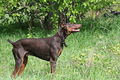 Dobermann
John Adams (2007) WikiMedia Commons
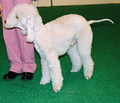 Bedlington Terrier
Pleple2000 (2006) WikiMedia Commons
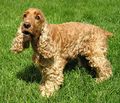 Cocker Spaniel
Ellen Levy Finch (2004) WikiMedia Commons
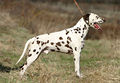 Dalmatian
Miroslav Cacik (2006) WikiMedia Commons
 Skye Terrier
Pleple2000 (2007) WikiMedia Commons
 Standard Poodle
John Leslie (2007) WikiMedia Commons
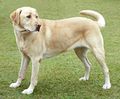 Labrador Retriever
Ellen Levy Finch (2004) WikiMedia Commons
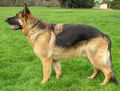 German Shepherd (Alsatian)
Ellen Levy Finch (2004) WikiMedia Commons
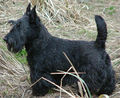 Scottish Terrier
Svencb (2003) WikiMedia Commons
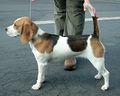 Beagle
sannse (2003) WikiMedia Commons


Aetiology
A number of aetiologies include:
- Familial predisposition
- Copper accumulation (copper storage disease)
- This may be a cause or consequence of chronic hepatitis. Copper is normally excreted in bile, therefore it can occur with any cholestatic hepatobiliary disorder.
- Chronic drug therapy
- Infectious, for example infectious canine hepatitis
- Autoimmune or steroid responsive disorder
Clinical Signs
These include:
- anorexia, lethargy and depression
- weight loss
- vomiting and diarrhoea
- polyuria and polydipsia
- ascites - most consistent in dogs with cirrhosis
- and rarely icterus, seizures, fever and bleeding diathesis
Laboratory tests
Haematology:
- Mild non-regenerative anaemia and microcytosis
Biochemistry:
- Increased alanine aminotransferase (ALT) and alkaline phosphatase (ALP). However these may not be increased if end-stage cirrhosis is reached.
- Hyperbilirubinaemia
- Hypoalbuminaemia
- Hyperglobulinaemia
- Decreased blood urea nitrogen (BUN)
- Hypoglycaemia
Further tests
- Increased bile acids
- Abnormal ammonia tolerance test
- Increased prolonged activated partial thromboplastin time (APTT) and prothrombin time (PT) indicates severe liver dysfunction or disseminated intravascular coagulation (DIC)
Imaging
Abdominal radiographs will only reveal microhepatica or ascites when advanced stages of disease are reached.
Ultrasonographically, liver may be normal or non specific changes in echogenecity may be seen in early stages of the disease. In cases of cirrhosis, microhepatica, irregularity in hepatic margin, focal lesions corresponding to regenerative nodules, hyperechogenicity of liver parenchyma associated with increased fibrous tissue and ascites may be seen.
Histopathology
This is required for definitive diagnosis and to differentiate chronic hepatitis from other hepatopathies. Chronic hepatitis is characterised by moderate to severe lymphoplasmacellular inflammation and necrosis of the hepatocytes adjacent to the portal tracts.
Treatment
- Glucocorticoids
- Taper down with improved clinical signs and normal liver enzymes values.
- This is not indicated for chronic hepatitis caused by drug therapy, primary copper accumulation or infectious agents.
- Response to treatment should be followed up by liver biopsy 3-6 months later as glucocorticoid causes steroid induced ALP
- Ursodeoxycholic acid at 15mg/kg PO SID
- It is a synthetic hydrophilic bile acid that has hepatoprotective (anti-inflammatory, immunomodulatory and antifibrotic effects) properties and choleretic effect. It expands the bile acid pool and displaces potentially hepatotoxic hydrophobic bile acids that accumulate in cholestasis.
- Vitamin E
- An antioxidant to scavenge free radicals which may contribute to oxidative hepatocellular injury.
- Copper chelation if copper exceeds 2000ppm
- Penicillamine
- Zinc
Prognosis
Response to treatment is variable. Dogs with fibrosis and cirrhosis carry a poorer prognosis.
| Hepatitis, Chronic Learning Resources | |
|---|---|
 To reach the Vetstream content, please select |
Canis, Felis, Lapis or Equis |
References
- (1) Van den Ingh, TSGAM et. al. (2006). Morphological classification of parenchymal disorders of the canine and feline liver. In Rothuizen J et. al., editors: WSAVA standards for clinical and histological diagnosis of canine and feline liver disease, Oxford, England, Saunders.
- Ettinger, S.J. and Feldman, E. C. (2000) Textbook of Veterinary Internal Medicine Diseases of the Dog and Cat Volume 2 (Fifth Edition) W.B. Saunders Company.
- Nelson, R.W. and Couto, C.G. (2009) Small Animal Internal Medicine (Fourth Edition) Mosby Elsevier.